


Running progress is rarely about doing more. More kilometres, more intensity, more strain. Sustainable improvement comes from doing things smarter. One of the most overlooked yet effective strategies isrotating running shoes.
Shoe rotation is not a trend reserved for elite athletes. It is a practical, evidence-supported approach that improves performance, reduces injury risk, and extends the life of your footwear. If you run consistently, whether for fitness, competition, or mental clarity, rotation is no longer optional. It is foundational.
Explore running shoes designed to work together in a rotation and find pairs that support different training demands.
What Running Shoe Rotation Means
Rotating running shoes means alternating between two or more pairs instead of relying on a single pair for every run. Each shoe plays a specific role, cushioning, responsiveness, stability, or terrain grip, depending on the demands of the session.
The value lies in variation. Different shoes place slightly different stresses on muscles, tendons, and joints. Over time, this variation reduces repetitive load and allows the body to adapt more efficiently.
This is not about owning more shoes. It is about using the right tools at the right time.
Benefits of Rotating Running Shoes
Rotating running shoes delivers compounding benefits over time. Instead of overloading the same muscles, materials, and movement patterns, rotation introduces controlled variation that supports both performance and longevity.
Key benefits include:
-
Improved running efficiency through varied muscle activation
-
Reduced injury risk by limiting repetitive strain
-
Extended shoe lifespan through proper midsole recovery
-
Better alignment between shoe design and training purpose
This approach allows runners to train consistently, recover more effectively, and get more value from every pair they own.
How Rotating Running Shoes Improves Performance
Performance improvements are often the result of smarter training, not harder training.
When you rotate running shoes:
-
Muscle activation patterns vary subtly between runs
-
Running economy improves through small biomechanical changes
-
Fatigue is distributed more evenly across tissues
Lightweight or responsive shoes promote faster turnover during speed sessions, while cushioned trainers reduce impact during long or recovery runs. This balance allows you to train with intent, pushing when needed, protecting when required.
Over time, runners who rotate shoes tend to maintain consistency, which is the true driver of performance gains.Compare performance-focused running shoes and identify options built for tempo runs, intervals, and race-pace training.
Reduce Wear and Extend the Life of Your Shoes
Running shoe midsoles do not fail suddenly. They fatigue gradually.
Foam materials need time, typically 24 to 48 hours, to decompress and recover after a run. Wearing the same pair repeatedly without rest accelerates breakdown, reducing shock absorption long before visible wear appears.
Rotating running shoes allows:
-
Midsole cushioning to recover between runs
-
Structural integrity to last longer
-
A lower cost per kilometre over time
Rather than replacing one worn-out pair frequently, rotation spreads wear across multiple pairs and preserves performance for longer.
Shoe Rotation and Injury Prevention
Most running injuries are not acute. They develop slowly through repeated stress on the same tissues.
Rotating shoes helps by:
-
Reducing repetitive load on specific joints and tendons
-
Introducing small variations in foot strike and movement patterns
-
Allowing overworked structures time to recover
This approach is particularly effective for managing common overuse injuries such as plantar fasciitis, Achilles irritation, and knee discomfort. While rotation is not a guarantee against injury, it significantly lowers cumulative risk when combined with sensible training volume.
Practical Shoe Rotation Strategies
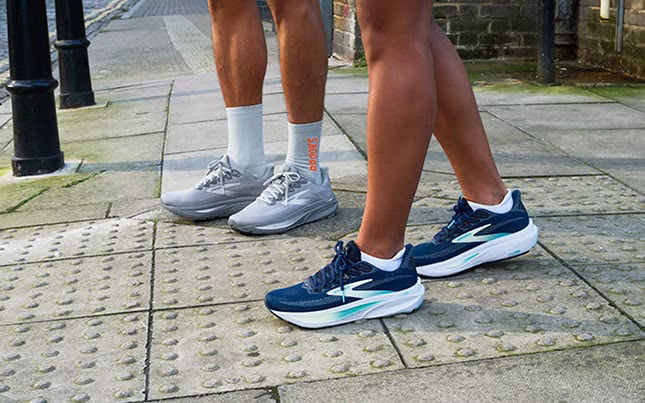
A rotation does not need to be complex. Most runners benefit from two to three pairs.
A simple rotation setup:
-
Daily trainer: Cushioned, supportive, used for easy and long runs, having varieties betweenminimal and maximalist running shoes to choose from
-
Performance shoe: Lighter and more responsive for speed sessions or races
-
Optional recovery or trail shoe: Designed for softer runs or off-road terrain
Alternate pairs across the week rather than within the same day. This gives materials time to recover and keeps each shoe aligned to its intended purpose.
Pairing Shoes for Different Training Types
Not all runs place the same demands on the body. Your shoes should reflect that.
-
Long runs: Prioritise cushioning and stability to reduce fatigue
-
Tempo or interval sessions: Choose responsive shoes that encourage efficient turnover
-
Recovery runs: Softer, forgiving shoes that reduce impact
Matching shoe design to training intent sharpens performance while protecting your body over the long term. Check out running shoes built for long runs, speed sessions, and race day, designed to work together, not in isolation.
Common Mistakes When Rotating Running Shoes
Rotation is effective only when done correctly. Common errors include:
-
Using shoes that are too similar, offering no meaningful variation
-
Rotating worn-out shoes that no longer provide adequate support
-
Changing too many variables at once, especially during high training loads
The goal is controlled variation, not constant disruption.
Choosing the Right Shoes for a Rotation
When building a rotation, look for clear contrasts between pairs. Differences in cushioning level, weight, and responsiveness are more important than brand or aesthetics.
Professional gait analysis and in-store expertise can help identify shoes that complement each other rather than overlap. This ensures your rotation works as a system, not a collection.
Why Shoe Rotation Is a Smarter Way to Run
Rotating running shoes is not about excess. It is about longevity, of your shoes, your body, and your performance.
By introducing variation into your training, you reduce wear, manage fatigue, and create the conditions for consistent improvement. In running, consistency always outperforms intensity in the long run.
A smarter rotation today means stronger running tomorrow. Build a running shoe rotation that works as hard as you do. Explore The Athlete’s Foot range online or in-store and take the smarter route forward.



Leave a comment (all fields required)